

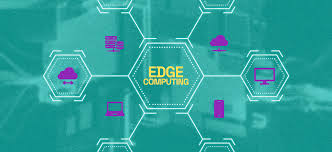
Online entertainment has entered a phase where speed is no longer just an advantage—it is a requirement. Users now expect instant responses, uninterrupted access, and real-time interaction across all digital platforms. This demand has pushed modern systems to evolve beyond traditional cloud setups and move toward edge computing and ultra-low-latency network models. In this rapidly developing environment, Pusat4D, an online gaming platform, reflects how advanced network architecture is shaping the future of digital entertainment by reducing delays, improving responsiveness, and delivering smoother real-time experiences across devices.
Unlike earlier systems that depended heavily on centralized servers, modern platforms are now distributed across multiple nodes closer to users. This structural change has significantly improved performance and made online entertainment more stable, responsive, and globally accessible.
Understanding Edge Computing in Digital Entertainment
Edge computing is a system where data processing happens closer to the user rather than relying entirely on distant centralized servers. This reduces the time it takes for data to travel back and forth, significantly improving speed and responsiveness.
Instead of sending every request to a faraway data center, edge systems process information at nearby locations.
This approach is especially important for platforms that require real-time interaction and continuous data exchange.
Why Traditional Cloud Systems Are Not Enough
Traditional cloud systems centralize all processing in large data centers.
While effective, this model creates delays when users are geographically far from the server.
These delays, known as latency, can affect performance in real-time digital environments.
How Edge Computing Solves Latency Problems
Edge computing reduces latency by bringing data processing closer to the user.
This minimizes the distance data must travel, resulting in faster response times.
It creates a smoother and more immediate digital experience.
Role of Low-Latency Networks in Modern Platforms
Low-latency networks are designed to reduce the time delay between user action and system response.
This is essential for online entertainment platforms where real-time interaction is critical.
Importance of Instant Response Systems
Instant response systems ensure that every user action is processed without noticeable delay.
This improves user satisfaction and engagement.
Even small delays can negatively impact digital experience quality.
Network Optimization for Global Users
Modern platforms serve users from different regions across the world.
Network optimization ensures consistent performance regardless of location.
This helps maintain fairness and stability across the entire system.
Edge Computing in Online Gaming Environments
Online gaming platforms benefit significantly from edge computing because they require real-time synchronization and fast response cycles.
Even milliseconds of delay can affect user experience.
Real-Time Game Data Processing
Edge systems process game data closer to users, reducing communication delays.
This ensures smoother gameplay and faster reaction times.
It enhances overall responsiveness in interactive environments.
Reduced Server Dependency
Edge computing reduces dependency on centralized servers.
This distributes workload more efficiently across multiple nodes.
It improves system stability and reduces bottlenecks.
Infrastructure Behind Low-Latency Systems
Low-latency systems rely on a combination of advanced infrastructure technologies.
These systems are designed to handle high-speed data transmission efficiently.
Distributed Server Networks
Distributed networks spread data processing across multiple locations.
This reduces pressure on a single server and improves speed.
It ensures consistent performance even during peak usage.
High-Speed Routing Mechanisms
Data routing systems determine the fastest path for information transfer.
Optimized routing reduces delays and improves response times.
This is essential for maintaining real-time interaction.
Impact on User Experience in Digital Platforms
Edge computing and low-latency systems have significantly improved how users experience digital entertainment.
Everything feels faster, smoother, and more responsive.
Seamless Interaction Flow
Users experience uninterrupted interaction without waiting for system responses.
This creates a more natural and engaging environment.
It improves overall satisfaction and usability.
Elimination of Performance Gaps
Performance gaps caused by distance or server overload are greatly reduced.
Users across different regions receive similar quality experiences.
This improves fairness and platform consistency.
Security Considerations in Distributed Systems
While edge computing improves performance, it also introduces new security challenges.
Data is processed across multiple locations, requiring stronger protection mechanisms.
Distributed Security Frameworks
Security systems must operate across all edge nodes simultaneously.
This ensures consistent protection across the entire network.
It prevents vulnerabilities in individual nodes.
Real-Time Threat Detection
Modern systems monitor all network activity in real time.
Any suspicious behavior is detected immediately and addressed.
This improves system safety and reliability.
Scalability in Modern Entertainment Platforms
One of the biggest advantages of edge computing is scalability.
Platforms can expand without affecting performance quality.
Handling Large User Traffic
Distributed systems can handle thousands or even millions of users simultaneously.
Workloads are balanced across multiple nodes.
This prevents system overload and downtime.
Flexible System Expansion
New nodes can be added easily to expand network capacity.
This allows platforms to grow without major structural changes.
It ensures long-term sustainability.
Role of AI in Optimizing Low-Latency Systems
Artificial intelligence plays a major role in managing and optimizing edge computing networks.
AI improves speed, efficiency, and predictive capabilities.
Intelligent Traffic Management
AI systems analyze traffic patterns and adjust routing automatically.
This ensures optimal performance at all times.
It reduces congestion and improves speed.
Predictive Performance Optimization
AI can predict system load and prepare resources in advance.
This prevents slowdowns during high usage periods.
It ensures consistent performance quality.
Future of Edge Computing in Online Entertainment
Edge computing is expected to become a standard foundation for future digital platforms.
As technology evolves, systems will become even faster and more intelligent.
Expansion of Global Edge Networks
More edge nodes will be deployed worldwide to improve accessibility.
This will reduce latency further and enhance global performance.
It will create a more connected digital environment.
Integration with Next-Generation Networks
Future technologies like 6G will further enhance edge computing capabilities.
This will enable near-instant communication between users and systems.
It will redefine expectations for digital speed and responsiveness.
Evolution of Real-Time Digital Ecosystems
Modern digital entertainment is evolving into a real-time ecosystem where speed, responsiveness, and stability are essential.
Edge computing and low-latency networks are at the center of this transformation.
They ensure that platforms remain fast, scalable, and globally accessible, shaping the next generation of online entertainment experiences.